
The Two-Step Skincare Routine for Even Skin Tone
Uneven skin tone rarely has a single cause, and it rarely responds to a single dramatic fix. A breakout leaves a mark. A week of sun deepens it. A harsh product meant to fade it irritates the skin, and irritation, it turns out, signals more pigment. For brown skin, that loop is especially familiar.
What Makes a Skincare Routine Actually Work
The best skin care routine isn't the one with the most steps, it's the one that does two jobs: treat the pigment through multiple pathways, and deeply hydrate the skin. A good skin care routine doesn't mean more products, it means the right two. Think of it less as a random skincare regime and more as a skin longevity routine targeted to your skin’s exact needs..
Why uneven tone happens, and why it lingers in brown skin
When skin senses a trigger (inflammation from a breakout, heat, friction or UV), pigment-producing cells called melanocytes switch on. They make melanin, package it into melanosomes and pass it to the surrounding skin cells. That handoff is what eventually shows up as a dark mark.
In deeper skin tones, melanocytes respond more intensely, so post-inflammatory hyperpigmentation tends to be darker and to last longer 1, 2. That’s why a pimple can clear in a week while its mark stays for months.
It’s also why the skin barrier matters. Anything that inflames the skin, including an overly aggressive treatment, can feed the same cycle you’re trying to stop.
Step 1 of Your Skincare Routine: Treat, at Night
The most effective pigmentation treatments don’t rely on one heroic ingredient. They act at several points in the pigment chain:
- Tranexamic acid works upstream, damping the inflammatory signals that prompt melanocytes to produce melanin. Topical tranexamic acid has shown meaningful improvement in melasma over 8–12 weeks of use 3, 4.
- Niacinamide interrupts the transfer of melanosomes to surface skin cells. In a landmark study, 2–5% niacinamide visibly reduced hyperpigmentation, and the marks gradually returned once use stopped 5.
- Alpha arbutin and licorice root extract slow tyrosinase, the enzyme that melanin production depends on 6.
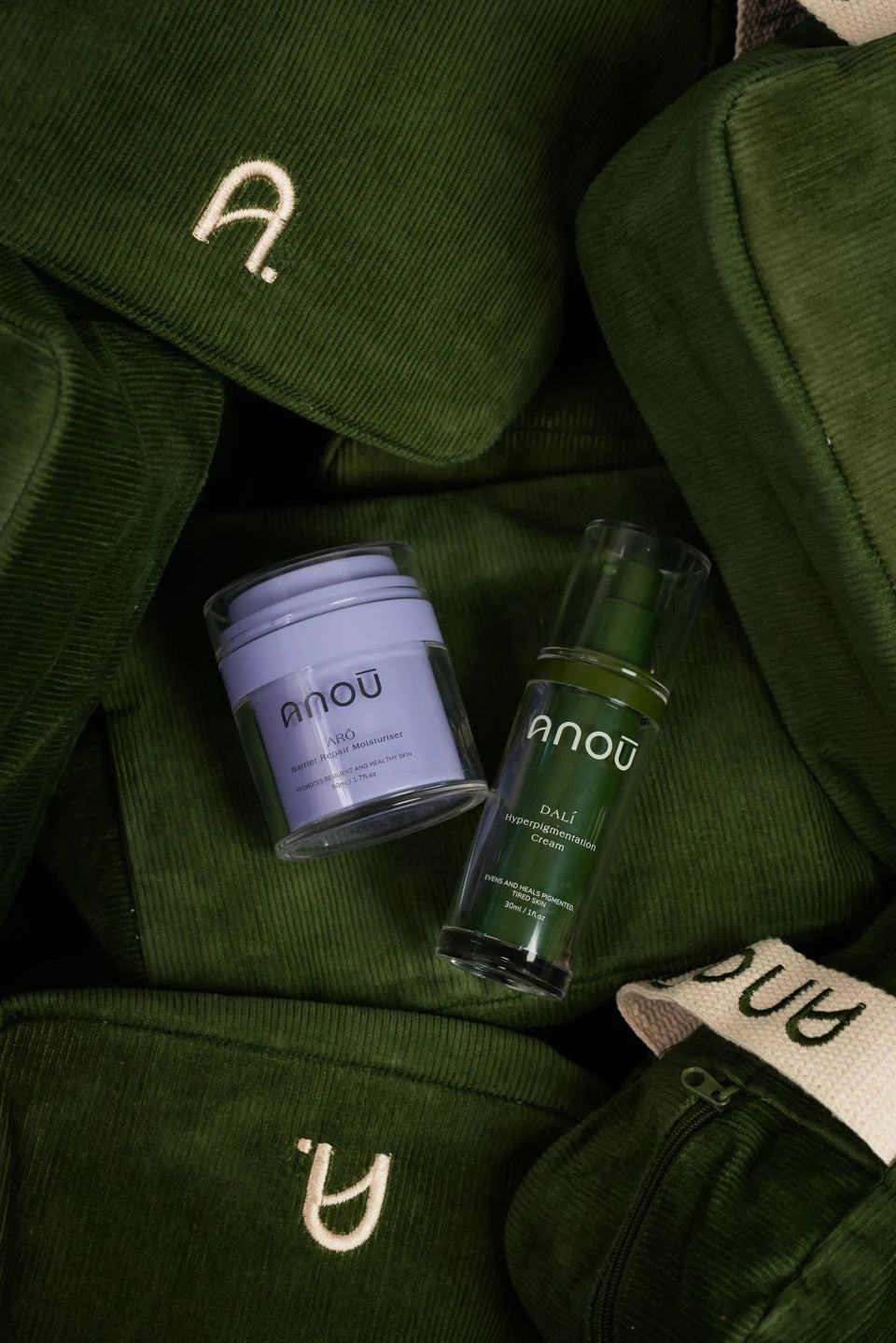
Dalí, our night-time pigmentation treatment, is built on this layered approach: 2% tranexamic acid, 5% niacinamide, 1% alpha arbutin and 1% licorice root extract, with 1% kojic dipalmitate and 1% salicylic acid for gentle surface turnover. The rest of the formula keeps the skin comfortable, with sea buckthorn oil, Copper Peptide-1 and allantoin, plus a 0.003% melatonin that works as an antioxidant overnight, while skin is in its natural repair window 7. Easy on your skin, harsh only on the dark spots.
Why night? Pigmentation actives can make some skin more sensitive to light, so Dalí belongs in the PM routine, followed by sunscreen the next morning.
Step 2 of Your Skincare Routine: Repair, Morning and Night
Think of your skin’s outer layer as brick and mortar. Skin cells are the bricks; lipids are the mortar, and ceramides make up roughly half of it 8. When that mortar is depleted, water escapes, irritants get in, and skin becomes reactive.
For this step, look for:
- Ceramides and essential fatty acids to replenish the lipid barrier directly
- Niacinamide, which has been shown to increase the skin’s own ceramide production and improve barrier function 9
- Humectants such as glycerin and sodium hyaluronate to hold water in the skin
- Soothing agents such as panthenol, allantoin and copper peptides to support comfort and repair
Arō, our barrier repair moisturiser, brings these together: 3% niacinamide, a 1% ceramide complex, 3% olive squalane, 10% rice extract, 1% panthenol and 1% Copper Peptide-1. It’s light enough for Indian humidity and layers under sunscreen without pilling. Light on skin, heavy just on the results.
A calm, hydrated barrier responds to treatment instead of reacting to it. That’s what makes this second step essential, not optional.
Your Exact Skin Care Routine, Step by Step
Morning: cleanser → Arō → sunscreen
Night: cleanser → Dalí → Arō
Sunscreen isn’t a third treatment step. It’s the constant that protects the work the other two are doing, since UV is one of the strongest pigment triggers.
If you’re new to actives, start Dalí on alternate nights and build up as your skin settles. Patch test first if your skin is reactive. Avoid pairing Dalí with retinol at first, and if you’re pregnant, check with your doctor before starting any pigmentation treatment.
The Nourish and Treat Duo brings Arō and Dalí together. The two formulas share niacinamide, Copper Peptide-1 and allantoin, so the comfort carries on from morning to night. It isn’t two routines, just one routine in two rhythms.
What consistency looks like
Pigmentation responds to time, not to single doses. Across clinical research on tranexamic acid, niacinamide and alpha arbutin, visible change typically appears over 4–12 weeks of consistent use 3, 5, 6. Recent post-acne marks tend to respond first; long-standing melasma usually needs at least three months. Results vary from person to person and depend on consistent use, sun protection and the kind of pigmentation your skin carries.
Arō’s comfort is felt much sooner, which helps you stay with the routine long enough for Dalí to do its work.
Two products, used well, every day. Consistency over intensity.
Frequently Asked Questions
What is the best skin care routine for uneven skin tone?
The best skin care routine for uneven tone is a two-step one: a treatment step at night to interrupt pigment production and treat current pigmentation, and a barrier-repair step morning and night to keep skin hydrated and calm enough to respond to treatment. More steps don't speed up results, consistency with the right two does.
What are the basic skincare steps everyone should follow?
At minimum: cleanse, treat (if you have a specific concern like pigmentation), moisturise, and apply sunscreen every morning. For uneven tone specifically, the treat and sunscreen steps matter most, as they work together to treat and prevent new pigment from forming
Can I use a pigmentation treatment and a barrier repair moisturiser together?
Yes, they're designed to be used together, not instead of each other. Arō and Dalí share key ingredients like niacinamide, Copper Peptide-1 and allantoin, so they're formulated to work in the same routine without conflicting.
How long does a skincare routine take to show results on dark spots?
Visible changes typically start to appear over 4–8 weeks of consistent use. Recent post-acne marks tend to respond fastest; melasma usually takes at least three months. Sunscreen use and consistency both affect how quickly results show.
References
- Davis EC, Callender VD. Postinflammatory hyperpigmentation: a review of the epidemiology, clinical features, and treatment options in skin of color. J Clin Aesthet Dermatol. 2010.
- Markiewicz E, et al. Post-inflammatory hyperpigmentation in dark skin: molecular mechanism and skincare implications. Clin Cosmet Investig Dermatol. 2022.
- Kim SJ, et al. Efficacy and possible mechanisms of topical tranexamic acid in melasma. Clin Exp Dermatol. 2012.
- Topical tranexamic acid for melasma: efficacy review. PMC.
- Hakozaki T, et al. The effect of niacinamide on reducing cutaneous pigmentation and suppression of melanosome transfer. Br J Dermatol. 2002.
- α-Arbutin: a comprehensive review of its therapeutic potential. Phytother Res.
- Clinical studies using topical melatonin. Int J Mol Sci. 2024.
- Schild J, et al. The role of ceramides in skin barrier function. Int J Cosmet Sci. 2024.
- Tanno O, et al. Nicotinamide increases biosynthesis of ceramides as well as other stratum corneum lipids to improve the epidermal permeability barrier. Br J Dermatol. 2000.
Keep reading
All articles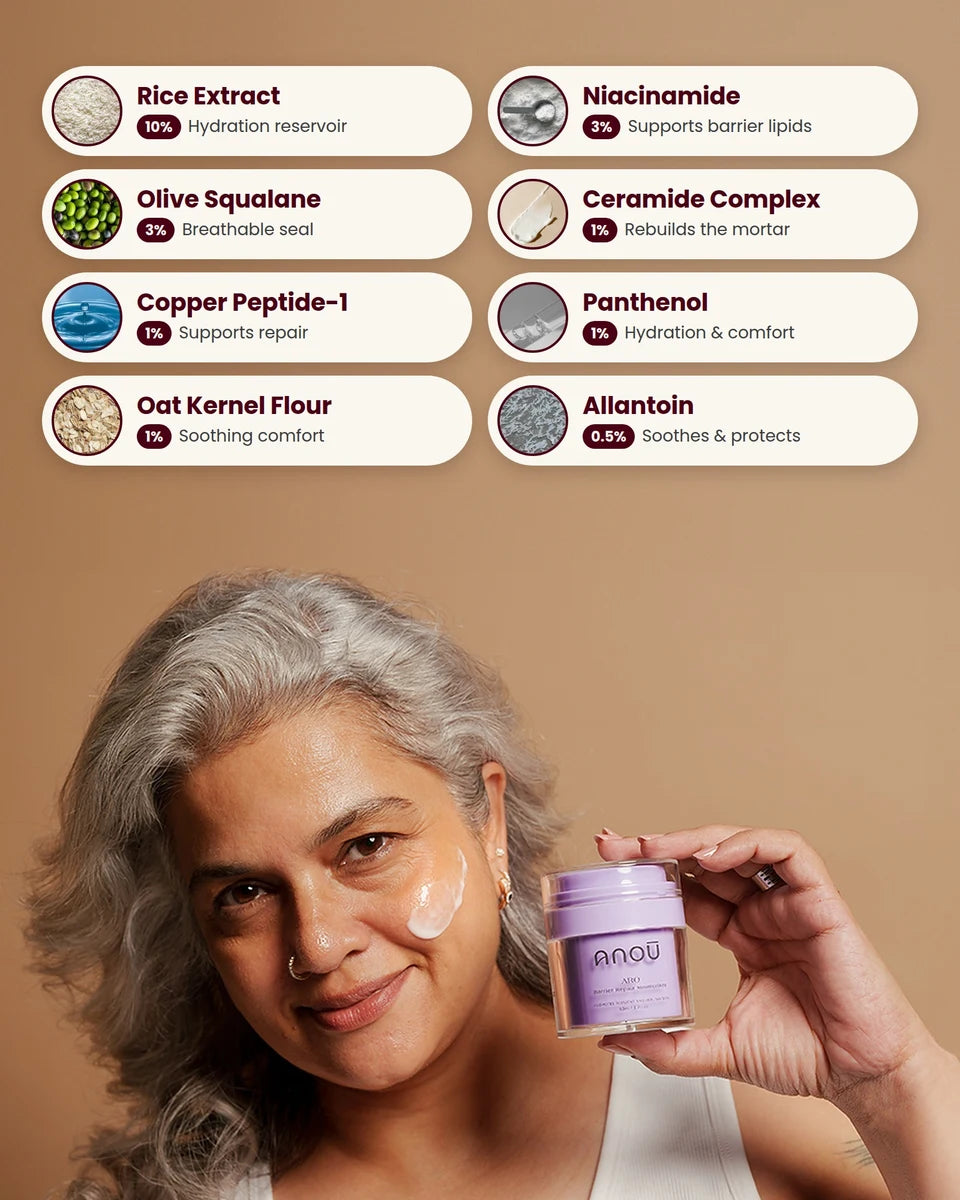
Barrier repair, explained
What a barrier repair cream does at each layer of your skin, which ingredients have real evidence, and how to choose the best barrier repair product.
Read story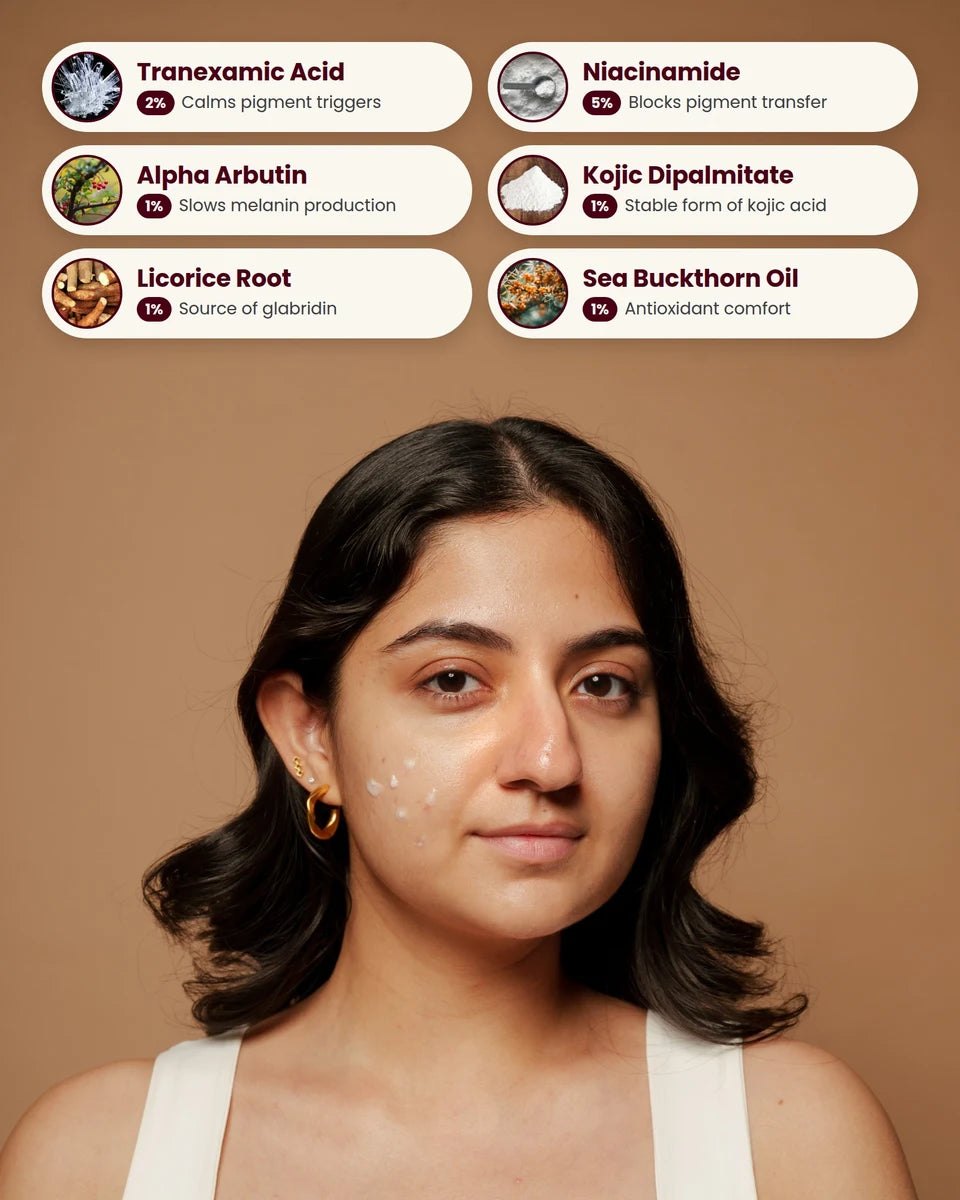
Understanding melasma
Most melasma creams only interrupt one step of pigment production. Read why melasma needs a multi-pathway cream, and what to look for in a melasma treatment cream that actually works.
Read story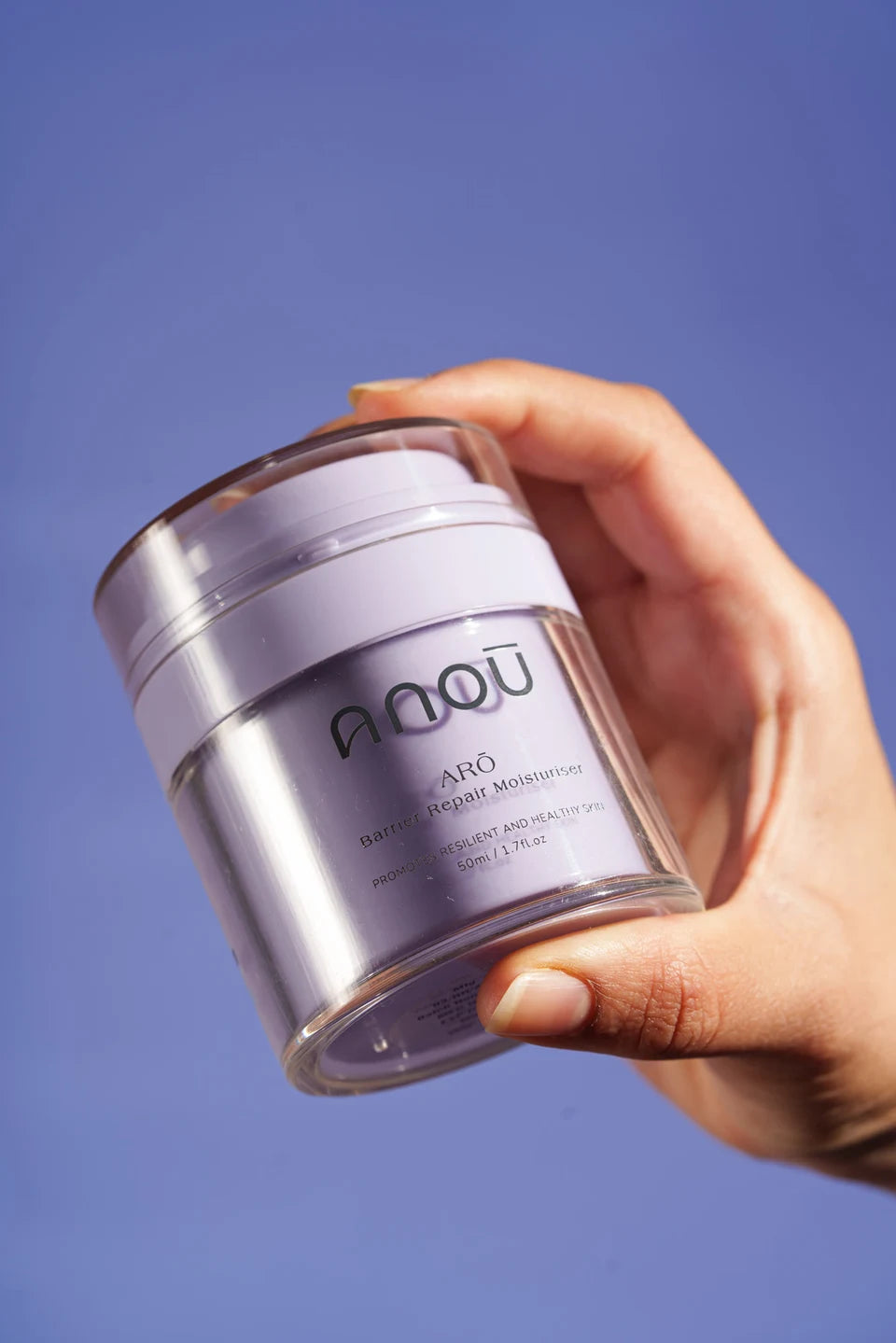
Pregnancy skincare: what to use, what to skip
Evidence-based pregnancy-safe skincare guide: which ingredients to skip, what to use, and how to read a pregnancy-safe moisturiser label.
Read story