
Melasma Isn’t a Cream Problem. It’s a Pathway Problem.
A peer-reviewed guide to what melasma actually is, why most creams don’t touch it, and what does.
You’ve probably met melasma in the mirror. The shadow across the upper lip that appeared after a pregnancy and never quite left. The soft brown patches on the cheekbones that concealer stopped hiding six months in. The freckle-blur across the forehead that gets darker every summer and lighter every winter — but never gone.
If you’ve been through the drill — the vitamin C, the brightening serum, the melasma treatment cream that promised fourteen days and delivered a very brief 20% reduction that then bounced back — you already know the frustrating part. Melasma responds, briefly. Then it doesn’t. Then it comes back.
There’s a reason for that, and it isn’t your skincare discipline. It's biology.
What Even Is Melasma?
Melasma is a chronic, acquired disorder of hyperpigmentation. It usually shows up as symmetrical brown or grey-brown patches, most often on the forehead, cheekbones, upper lip, chin, and jawline. It disproportionately affects women — roughly 90% of cases — and people with skin of colour, particularly Fitzpatrick types III–V, which covers most Indian skin tones*(Sarkar et al., Indian Dermatology Online Journal, 2014).
*see this carousel on our ig to know more!
It gets triggered by a familiar mix: UV radiation (the biggest culprit), hormones like estrogen (which is why pregnancy and oral contraceptives set it off), visible light including the blue light off your phone, heat, and the genetics you didn’t get to choose.
Those triggers activate melanocytes — the pigment-producing cells at the base of your epidermis — into overproducing melanin. And here’s the thing about melasma specifically: those melanocytes stay activated even after you remove the trigger. It’s why the patch persists through winter. It’s why the melasma serum works for two months and then plateaus. The system is stuck in the “on” position.

Read diagram text
How melasma happens. UV and hormones activate melanocytes; melanin builds up and is visible as patches. UV and hormones: the trigger. Melanocyte: over-produces melanin. Keratinocytes: melanin accumulates here. Dermis. Visible patches: the result. This cascade continues after the trigger is removed, which is why melasma persists.
The cascade behind every patch. Interrupting it takes more than one active.
Four steps. Four places to intervene.
Melanin production isn't a single event. It's a cascade, four biological steps, happening in sequence:
Signal. A trigger (UV, hormone, heat) sends a chemical message to the melanocyte.
Activation. The melanocyte switches on.
Enzyme. Tyrosinase, the rate-limiting enzyme, converts an amino acid into melanin.
Transfer. Melanin gets packaged and shipped to keratinocytes (skin cells), where it becomes the visible patch.
A single-active melanin reduction cream, one that relies only on kojic acid, or only on niacinamide, can interrupt one of those four steps. Which is why it works, a little. And why it plateaus, a lot. Melasma is running on all four at once. You need a formula doing the same.
Melasma Serum Ingredients With Actual Evidence
This is where science does the heavy lifting. Below are the ingredients whose mechanisms are best-established in the peer-reviewed dermatology literature, at concentrations that were actually clinically studied:
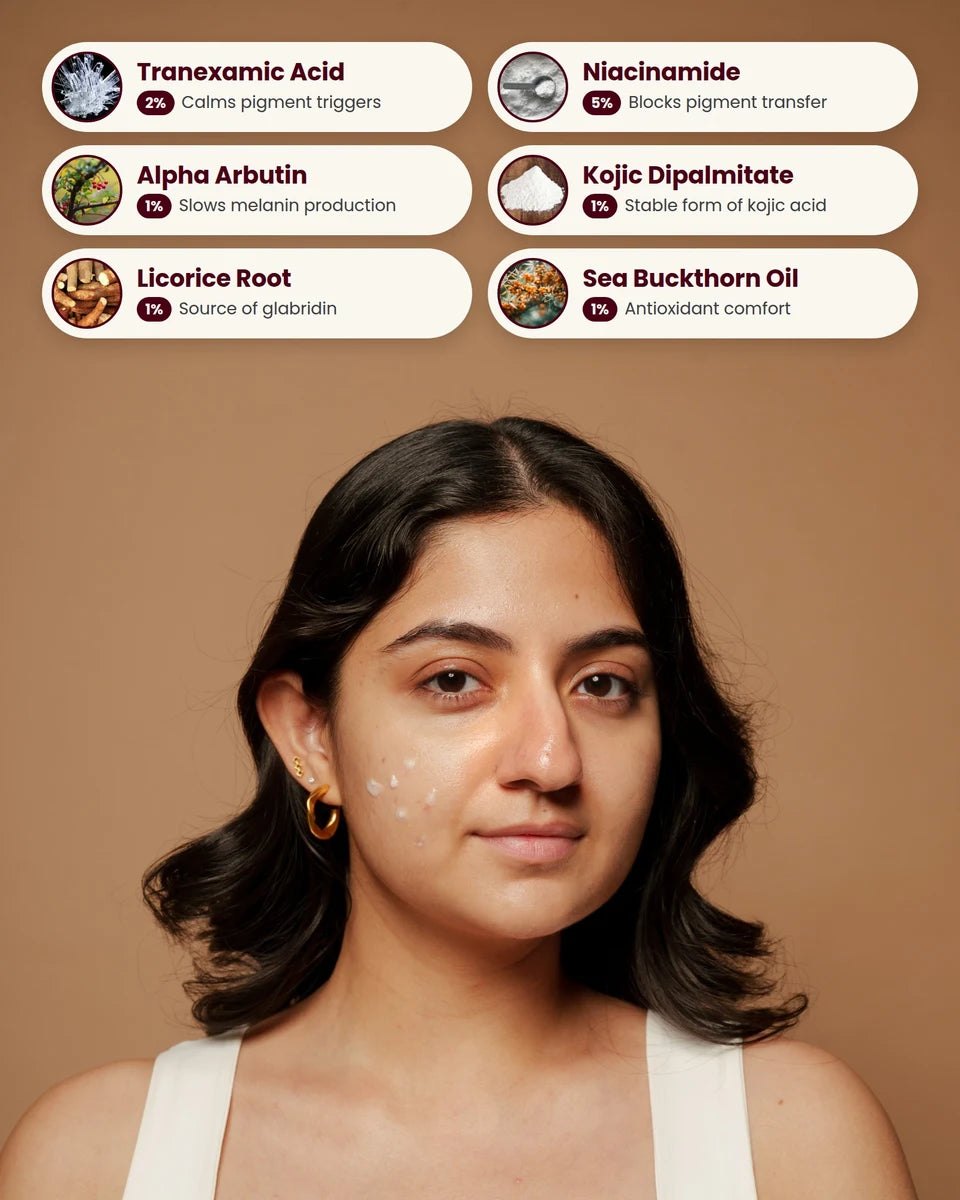
Tranexamic acid (TXA). The most significant addition to melasma treatment in the last decade. It inhibits plasmin, dampening the UV-triggered activation signal upstream. A meta-analysis in Acta Dermato-Venereologica (Kim et al., 2017) showed significant reductions in MASI scores — the clinical melasma severity index — at 8–12 weeks with topical 2–5% TXA.
Niacinamide (Vitamin B3). Hakozaki and colleagues published the landmark paper in the British Journal of Dermatology in 2002. They showed that 5% niacinamide reduces melanosome transfer by up to 68% — meaning less melanin actually reaches the surface cells where it becomes visible. Improvement starts at 4 weeks; significant at 8–12.
Alpha arbutin, kojic dipalmitate, and licorice extract (glabridin) all target the tyrosinase enzyme itself — three different mechanisms for chemically shutting down the melanin-production machinery. Yokota et al. (Pigment Cell Research, 1998) established glabridin’s dual role as tyrosinase inhibitor and anti-inflammatory.
Azelaic acid is elegant — it selectively targets hyperactive melanocytes, ignoring normal ones. Melatonin, an unexpected inclusion, is emerging in the literature as a potent cutaneous antioxidant that neutralises the UV-triggered oxidative stress at the source.
Search for a melasma treatment cream and you'll find two kinds: a melanin reduction cream, sometimes just labelled a melanin cream, built around one active, and a brightening serum that fades the surface without addressing the cascade underneath. Neither fully solves the biology above, because neither interrupts more than one step.
Enter Dalí — built for the multi-pathway problem.
Dalí is what you get when you stop trying to win with one ingredient and start formulating around the biology instead. It puts every active named above into one bottle, at clinically-referenced concentrations, layered to interrupt melasma at each of its four steps: 2% tranexamic acid (signal), 5% niacinamide (transfer), 1% alpha arbutin, 1% kojic dipalmitate, and 1% licorice extract (three separate hits on tyrosinase), 0.5% azelaic acid (targeting hyperactive cells), 0.003% melatonin (upstream antioxidant), plus 1% copper peptides, 1% sea buckthorn oil, 1% salicylic acid, and 0.5% allantoin for barrier, turnover, and calm.
That isn’t a typical melanin reduction cream in the marketing sense of the phrase. It’s a multi-pathway intervention that just happens to come in a bottle.

Read diagram text
How Dalí interrupts the cascade. Eleven actives, each targeting a specific step of melanin production. The supplied illustration contrasts active melasma without treatment with ‘measurable clearing’ after 12–24 weeks of Dalí.
Tranexamic acid 2%: blocks upstream signal. Niacinamide 5%: cuts melanin transfer. Alpha arbutin 1%: inhibits tyrosinase. Kojic dipalmitate 1%: inhibits tyrosinase. Licorice extract 1%: inhibits and calms. Azelaic acid 0.5%: targets active cells. Melatonin 0.003%: neutralises free radicals. Copper peptides 1%: supports barrier. Salicylic acid 1%: accelerates turnover.
Every active in Dalí, mapped to the step of the cascade it intercepts.
Melasma is a marathon — here’s the route
If a brightening serum is promising you visible results in fourteen days, you’re being told a story about vanity, not biology. The peer-reviewed literature on individual actives measures meaningful change at 8–12 weeks. A multi-active formula compounds — earlier at the surface, more significant deeper in. Here’s the realistic map for a cream for melasma on face:
Weeks 1–2 Your barrier is adjusting. Nothing visible yet. This is normal.
Weeks 3–4 Melanosome transfer starts slowing. You’ll see slight tone evening.
Weeks 6–8 Melanocyte activity dampens. Noticeable reduction in patch intensity.
Weeks 10–12 The clinical endpoint. Measurable, MASI-equivalent improvement.
Weeks 16–24 Full potential visible. Maintenance begins.

Read diagram text
What to expect, week by week. The supplied illustration describes a 12–24 week course with consistent daily use: weeks 1–2, barrier adjusting; weeks 3–4, slight tone evening; weeks 6–8, noticeable reduction; weeks 10–12, measurable clearing; weeks 16–24, full potential and maintenance.
Image note: SPF 30+ every morning is required. Skipping sun protection reverses gains regardless of active concentrations.
What consistent use of a multi-active melasma cream actually looks like over time.
Two non-negotiables. Consistency — skipping days resets the compound effect. And SPF 50+ every single morning — because the UV trigger is still firing, and no formula anywhere in the world will win against a face that keeps getting re-triggered every afternoon.
If you're building out a full routine around Dalí, pair it with a barrier-repair step so skin stays calm enough to respond to treatment instead of reacting to it. Not sure where to start? Take the skin quiz.
The bottom line, briefly
Melasma didn't form in one step, and it won't leave in one either. The products that actually work are the ones built to match that - are patient, layered, and active at every step the pigment itself is working through.
With 11 actives that target all 4 pigment steps, Dalí is built exactly that way.
Frequently Asked Questions
What is melasma?
Melasma is a chronic, acquired disorder of hyperpigmentation that shows up as symmetrical brown or grey-brown patches, most often on the forehead, cheekbones, upper lip, chin and jawline. It disproportionately affects women and people with skin of colour, particularly Fitzpatrick types III to V, which covers most Indian skin tones.
What is the best melasma treatment cream?
The most effective melasma treatment cream targets more than one step of the pigment cascade at once, not just one ingredient. Look for a formula combining tranexamic acid, niacinamide, and a tyrosinase inhibitor such as alpha arbutin or licorice extract, since melasma is driven by multiple biological pathways running at the same time.
Why does melasma keep coming back after treatment?
Melasma's melanocytes stay activated even after a trigger is removed, which is why a single-active cream often works briefly and then plateaus or relapses. A multi-pathway approach, paired with daily SPF 50+, addresses more of the cascade that keeps reactivating the pigment.
How long does melasma cream take to work?
Most peer-reviewed studies on individual melasma actives measure meaningful change at 8 to 12 weeks. A realistic timeline: weeks 1 to 2 are adjustment with little visible change, weeks 3 to 4 show slight tone evening, weeks 6 to 8 show noticeable reduction, and weeks 10 to 12 mark the clinical endpoint, with full potential visible by weeks 16 to 24 (a process of 3-5 months).
References
- Sarkar, R., Arora, P., Garg, V. K., et al. (2014). Melasma update. Indian Dermatology Online Journal, 5(4), 426–435.
- Kim, H. J., Moon, S. H., Cho, S. H., Lee, J. D., Kim, H. S. (2017). Efficacy and safety of tranexamic acid in melasma: a meta-analysis and systematic review. Acta Dermato-Venereologica, 97(7), 776–781.
- Del Rosario, E., Florez-Pollack, S., Zapata, L., et al. (2018). Randomized, placebo-controlled, double-blind study of oral tranexamic acid in the treatment of moderate-to-severe melasma. Journal of the American Academy of Dermatology, 78(2), 363–369.
- Hakozaki, T., Minwalla, L., Zhuang, J., et al. (2002). The effect of niacinamide on reducing cutaneous pigmentation and suppression of melanosome transfer. British Journal of Dermatology, 147(1), 20–31.
- Yokota, T., Nishio, H., Kubota, Y., Mizoguchi, M. (1998). The inhibitory effect of glabridin from licorice extracts on melanogenesis and inflammation. Pigment Cell Research, 11(6), 355–361.
Keep reading
All articles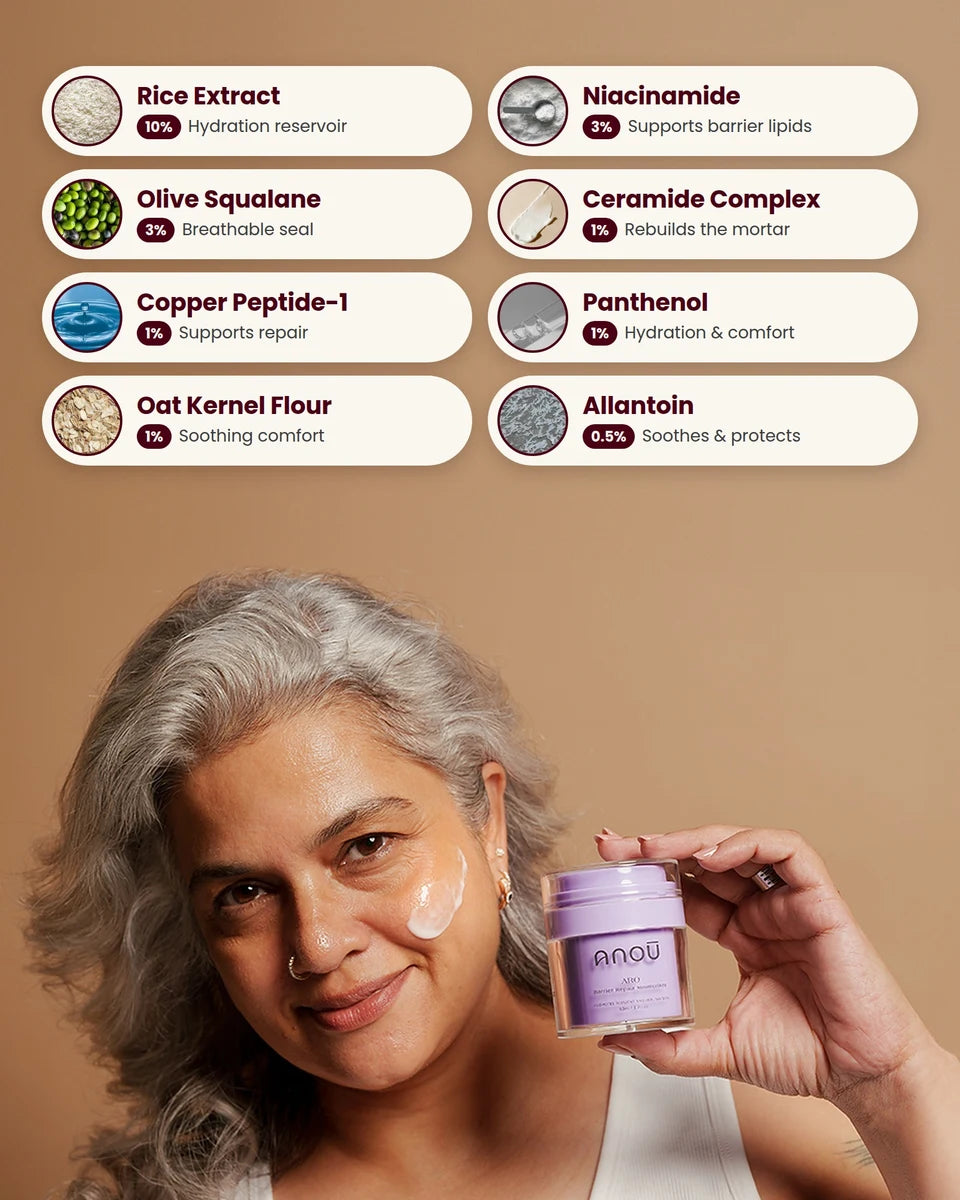
Barrier repair, explained
What a barrier repair cream does at each layer of your skin, which ingredients have real evidence, and how to choose the best barrier repair product.
Read story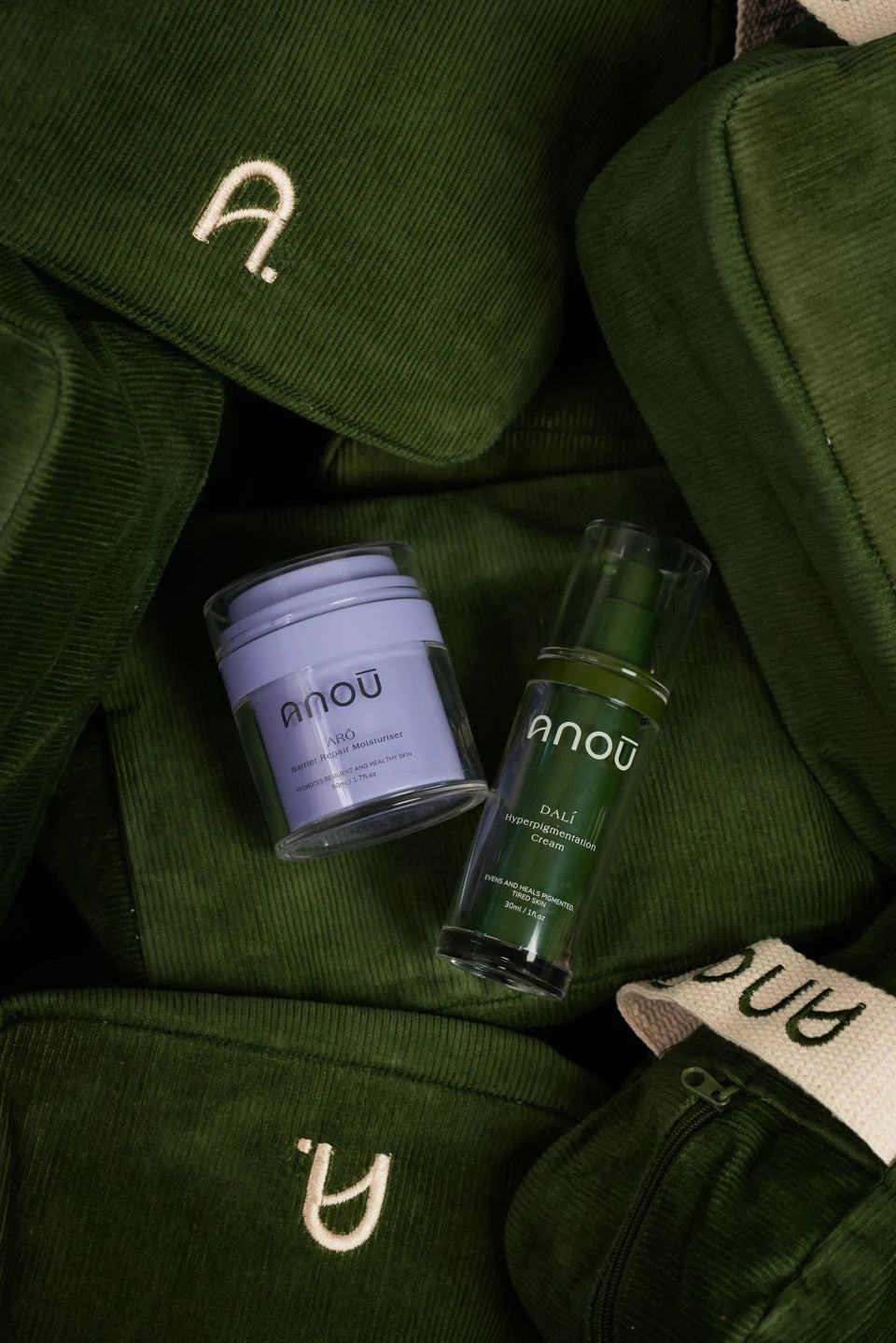
A two-step routine for even skin tone
The best skin care routine for uneven tone isn't more steps, it's the right two. Read how a treatment step and a barrier-repair step work together, and which ingredients do the work.
Read story
Pregnancy skincare: what to use, what to skip
Evidence-based pregnancy-safe skincare guide: which ingredients to skip, what to use, and how to read a pregnancy-safe moisturiser label.
Read story